




One of the questions people ask most often before their first sailing trip sounds trivial, but it’s a perfectly fair one: what do you eat for a week on a boat? Do you cook, who cooks, where do you buy food and how often do you eat out?
The good news is that food on a sailboat is one of the best parts of the holiday. The mix of simple meals on deck and dinners in local tavernas creates a rhythm that’s hard to find on an ordinary beach holiday. In this article we explain how it works in practice and how to prepare so that everything runs smoothly.
What the galley is like
Every charter sailboat and catamaran has an equipped galley. Usually that means a gas hob with two or three burners, often an oven, a sink, a fridge (and on larger boats often an ice maker or an extra fridge in the cockpit), plus crockery, pots, pans, cutlery and glasses for the whole crew. On a sailboat the hob sits on a gimbal, so it stays level even when the boat heels.
There are a few things to keep in mind, though:
- The fridge is smaller than the one at home and runs on power from the boat’s batteries. It cools best when it isn’t opened too often and when nothing warm goes in.
- Water is limited. The tanks are filled in marinas, so washing up and cooking are planned to save water. Bottled water is bought for drinking.
- Storage space is well laid out, but there isn’t a lot of it. It’s better to shop little and often than to buy everything for the whole week at once.
- Gas is included, and the skipper shows you how to light and turn off the hob safely.
Anyone who has cooked in a caravan or a small holiday cottage will manage without any trouble. Nobody makes complicated dishes on board: the food is simple, made from fresh ingredients and quick to prepare.
Shopping and planning: how it works in practice
Most crews do their first shop at a supermarket near the marina on the day they board. There’s no need to buy for the whole week: on the islands almost every village has a shop or bakery, sometimes a market too, and the skipper knows where to find what.
A good plan for the first shop usually includes:
- basics: coffee, tea, sugar, salt, oil, pasta, rice, tins (tuna, tomatoes, pulses),
- for breakfast: bread, eggs, yoghurt, honey, cheese, ham, oats,
- for lunch in a bay: salad vegetables, feta, olives, hummus, water, juice, fruit,
- snacks and drinks for an aperitif in the cockpit before sunset,
- plenty of bottled water: in summer you drink more on board than you’d expect,
- cleaning basics: washing-up liquid, sponges, bin bags, kitchen roll.
Everything else, especially fresh fruit, vegetables, bread and fish, is best picked up along the way.
How the crew shares costs
Most crews set up a shared “kitty”. At the start of the week everyone puts in the same amount, and it covers food, fuel, marinas and other shared costs. One person keeps track, and at the end whatever is left is split, or everyone tops up. Dinners in tavernas are usually paid separately or from the kitty too, whichever the group prefers. The only important thing is to agree on it before you set off, to avoid any awkwardness.
Food for the skipper
When you sail with a skipper, it’s customary for them to eat with the crew, meaning their meals on board are part of the shared shopping. Restaurant dinners aren’t an obligation for the crew, but many groups are happy to invite the skipper to join them, and it’s often the best way to find out where to eat well in each place.
Can you bring food from home?
Dry goods such as coffee, spices, pasta and sweets are usually no problem. With meat and dairy it depends on where you’re travelling from: within the EU you can bring them for personal use, but bringing meat, meat products and dairy into the EU from most non-EU countries is not allowed. Either way, there’s little point in packing much, since a boat calls for light luggage and you’ll find almost everything in Greece, from feta to cured meats in the local shop.
What a day looks like, meal by meal
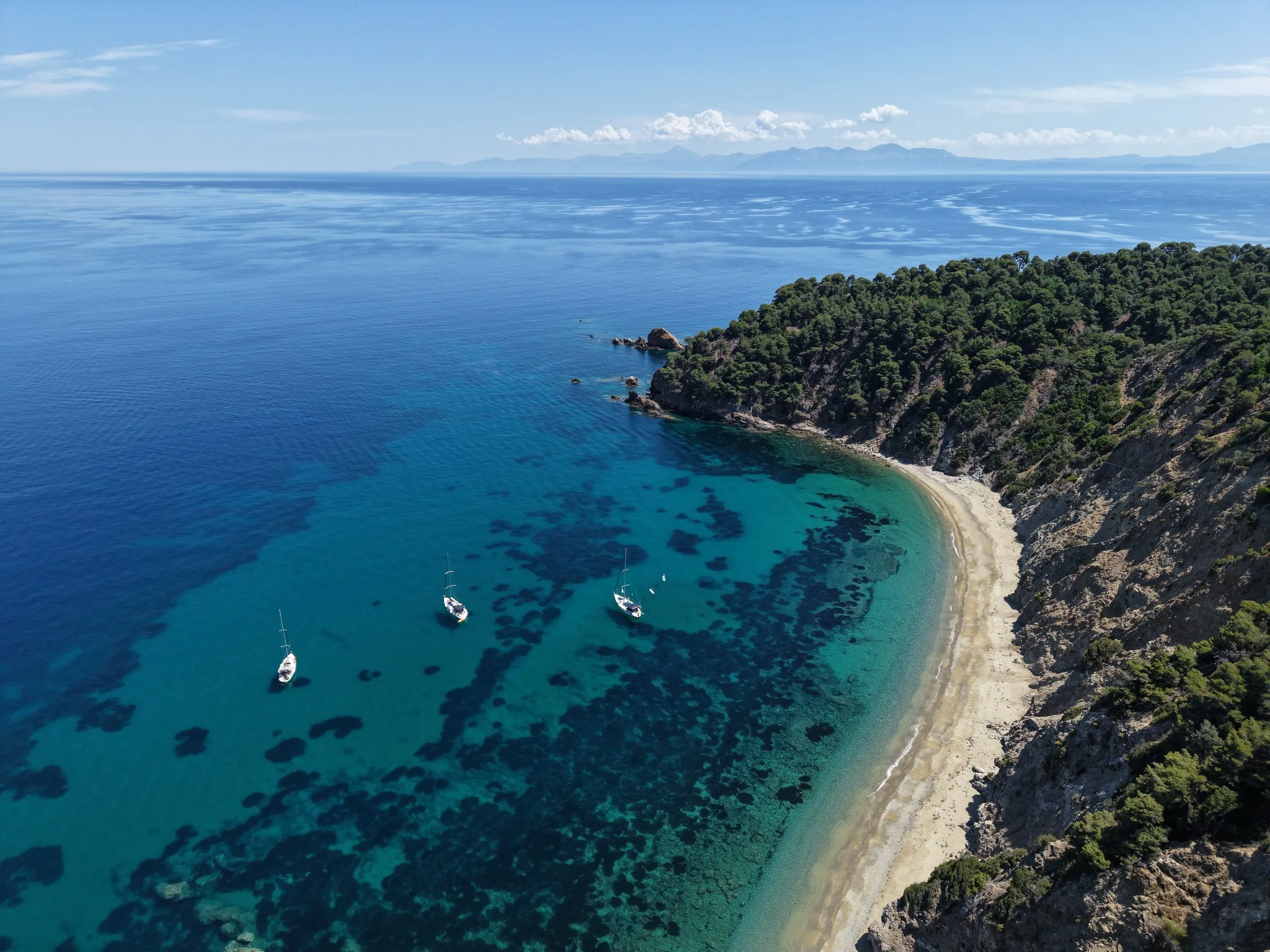
Breakfast is almost always on board. Coffee on deck in a quiet bay, eggs, bread, yoghurt with honey and fruit. Many people say this is their favourite part of the day.
Lunch is usually eaten at anchor, between swims. Light and fresh: Greek salad, bread, feta, olives, tzatziki, maybe pasta or something grilled if the boat has a barbecue on the stern. In summer nobody wants a heavy meal in the middle of the day.
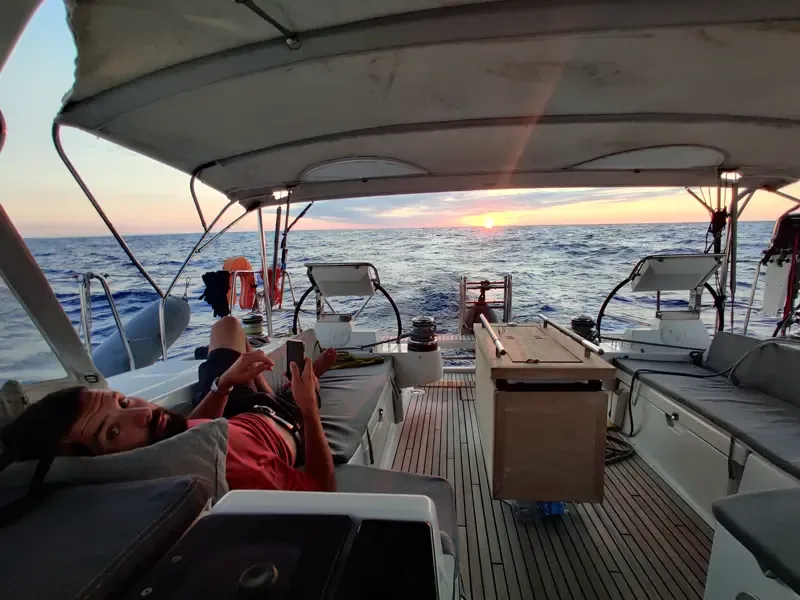
Dinner is where you have a choice. Most crews mix it up: a few evenings in tavernas and a few on board, especially when you spend the night anchored in a bay with no restaurants. Then you cook something simple, and dinner under the stars in the cockpit is an experience in itself.
Tavernas: what’s worth trying
Almost every island harbour has at least one taverna right on the quay, and many have been run by the same family for decades. Prices are generally reasonable, portions are generous, and fresh fish and seafood are the speciality.
A few dishes worth trying:
- fresh grilled fish: usually chosen from the display and priced by the kilo, so it’s a good idea to ask the price first,
- squid and octopus: fried squid (kalamarakia) or grilled octopus,
- meze: tzatziki, melitzanosalata (aubergine dip), taramosalata, saganaki (fried cheese), dolmadakia,
- gemista: stuffed tomatoes and peppers,
- moussaka and pastitsio: for anyone who wants something warm and filling,
- local specialities: Skopelos is known for its cheese pie, Aegina for its pistachios, and the Ionian islands for dishes influenced by Italian cooking.
You usually don’t need to book a table, but in popular places in July and August it’s worth arriving early or asking the skipper to call ahead. Greeks eat late, and dinner often doesn’t start until after nine.
A few practical tips
- Agree on who cooks. It works best when the crew splits into pairs who take turns, so nobody spends the whole holiday in the galley.
- Keep it simple. One-pot dishes, pasta, salads and grilling are ideal on a boat. Save the complicated recipes for home.
- Don’t cook while sailing unless the sea is completely calm. Meals are prepared at anchor or in harbour.
- Buy local. Fresh vegetables from the market, bread from the village bakery and fish straight from the fisherman are often the best meals of the week.
- Mind the rubbish. Waste is kept in bags and disposed of in marinas, and nothing goes into the sea.
- Tell the skipper about any special requirements. If someone doesn’t eat meat, follows a particular diet or has an allergy, it’s best to mention it at the start so the shopping and the choice of tavernas can be adjusted.
Finally
Food on a sailboat isn’t a problem to be solved but part of the experience. Morning coffee in a bay, lunch between swims and dinner on the quay while the boats rock gently in the harbour: those are the moments people remember most when they get home.
With a little planning and a shared kitty, it’s all easier than it looks. And if you’re not sure how to plan the shopping for your crew, just ask us: we’re happy to share what has worked best in practice.