
For most people, sailing is still something exotic. Many of us grew up with the same kind of summer holiday: a long journey to the coast, an apartment, a beach five minutes’ walk away and ten days on the same sunbed. Yachts were something we saw from the shore or in films, so it’s no surprise that quite a few assumptions have built up around them over time.
Some of these have a grain of truth, some are completely wrong, and some were true twenty years ago but no longer are. In this article we go through the questions we most often get from people who have never set foot on a boat, and we try to answer them as honestly as we can, including the situations where sailing may not be the best choice.
Myth 1: “Sailing is only for the rich”
For most people, the word “yacht” brings to mind luxury and astronomical prices. Those yachts do exist, of course, but a typical sailing yacht or catamaran charter works differently.
You rent the whole boat, usually for a week, and the price is split among everyone on board. A 12 to 15 metre yacht normally has three or four cabins, so six to eight people can stay on it comfortably. Once the total cost is divided across the whole group, the amount per person is often comparable to a classic holiday in high season.
To avoid surprises, it’s important to understand what makes up the price:
- Boat hire – the main item, depending on the size of the boat, the type (monohull or catamaran) and the dates.
- Skipper – the professional who runs the boat; for guests without experience, a skipper is a required part of most packages.
- Fuel – used when motoring and for running the generator; the amount depends on the route and the wind.
- Marinas and port fees – paid when the boat ties up in a harbour; nights at anchor in a bay are free.
- Food and drinks – as on any holiday, but here you have a choice: cooking on board or dinner at a taverna.
- Final cleaning and any extra equipment.
Many crews set up a shared kitty for fuel, marinas and groceries, so these costs are divided evenly. With us, for example, a week with a skipper starts from €290 per person, with a clear list of what is and isn’t included – and that is exactly what we recommend checking with any offer.
Myth 2: “I need to know how to sail”
You don’t. To hire a boat without a skipper you need the right licence and experience, but for a skippered holiday you don’t need any prior knowledge. The skipper handles the boat, plans the route, follows the weather forecast, brings the boat into harbours and anchors in bays. You are the guest.
What’s expected of you comes down to a few simple things: follow instructions when mooring or casting off, don’t run around on deck while the boat is manoeuvring, and be careful with water and electricity on board, because the tanks are limited.
On the other hand, if you’re curious about how it all works, a sailing yacht is a great place to learn the basics. After just two or three days, guests are often taking the helm themselves, helping to hoist the sails or tying up in harbour. It’s not an obligation, but for many people it becomes their favourite part of the week.
Myth 3: “I’ll be seasick the whole time”
Seasickness happens when the brain gets conflicting signals: the eyes see one thing while the inner ear feels the rocking. Some people are more prone to it, but for most it only appears in bigger waves and usually goes away once the body gets used to the motion, most often during the first or second day.
A few things really do help:
- Stay on deck and look at the horizon. The worst thing you can do is stay below in the cabin reading or looking at your phone while under way.
- Don’t set off on an empty stomach, but not on a full one either. A light breakfast, plenty of water and no alcohol the night before a longer passage.
- Choose a spot in the middle of the boat, where the rocking is smallest.
- If you know you’re prone to it, ask a pharmacist about anti-nausea remedies before the trip.
Where you sail matters too. In the Greek archipelagos you sail between islands that are relatively close to one another, and the legs last a few hours a day. The rest of the time the boat is at anchor or in harbour, where it’s calm. Thanks to their two hulls, catamarans rock considerably less than classic monohulls, so they’re a good choice if you’re worried about feeling sick.
Myth 4: “Boats are cramped and uncomfortable”
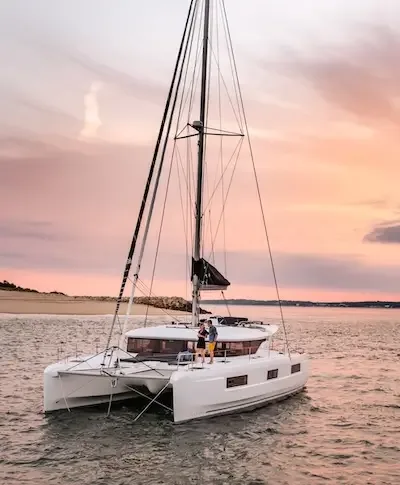
Modern sailing yachts and catamarans are designed specifically for holidays. A 13–14 metre boat has separate cabins with double beds, one or more bathrooms with a shower and toilet, a galley with a stove and fridge, a saloon and a cockpit with a table, which is where you’ll eat most of the time. A catamaran has even more space, and its cabins are usually in two separate hulls, which gives more privacy.
Still, to be honest: a boat isn’t a hotel. Cabins are smaller than a hotel room, shower water has to be saved between marinas, and the lockers aren’t made for ten pairs of shoes. The people who feel best on board are usually the ones who pack light: swimwear, a few T-shirts, something warmer for the evening, and a soft bag instead of a hard suitcase, because it’s easier to stow.
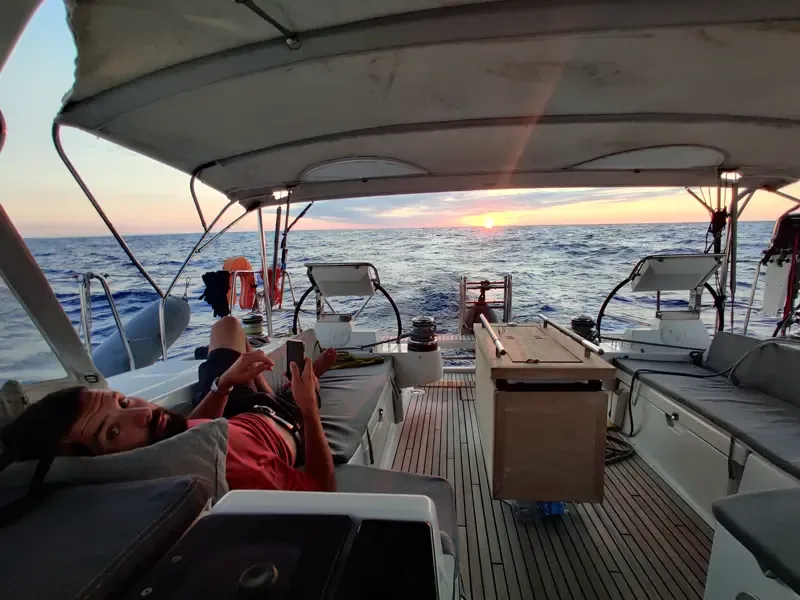
In practice, you spend most of the day outside: on deck, in the water or ashore. The cabin is mainly for sleeping.
Myth 5: “Sailing is dangerous”
With an experienced skipper, in season and in familiar waters, sailing is a very safe kind of holiday. Charter boats must carry the required safety equipment: life jackets for all passengers, a life raft, distress flares, fire extinguishers, a VHF radio and first aid equipment.
At the start of the week the skipper gives a short safety briefing: where the equipment is, how to use a life jacket, what to do if someone falls overboard, how to move around the deck. It takes about ten minutes and is worth taking seriously.
Most of the safety, however, comes from planning. The skipper checks the forecast every day, and the route adapts to the weather, not the other way round. If strong wind is forecast for tomorrow, the crew stays in a sheltered harbour or chooses a shorter leg in the lee of an island. Experienced skippers don’t set out and hope for the best.
Myth 6: “I’m afraid of the open sea – we won’t see land for weeks”
We hear this fear very often, especially from people who aren’t confident swimmers or who generally don’t feel comfortable in deep water. The picture most people have in their heads, a small yacht alone in the middle of the ocean with no land in sight, has little to do with what a week of sailing in Greece looks like.
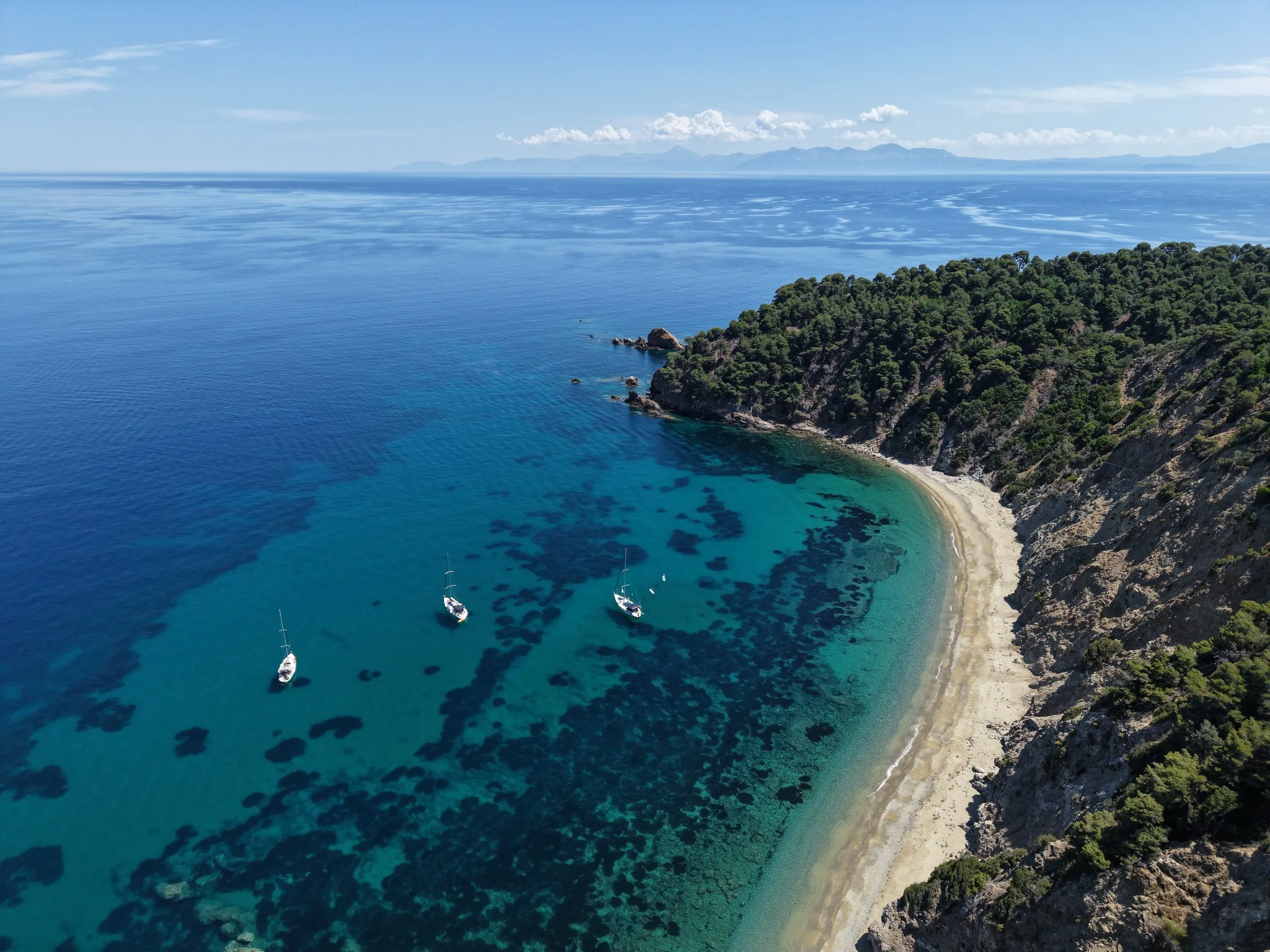
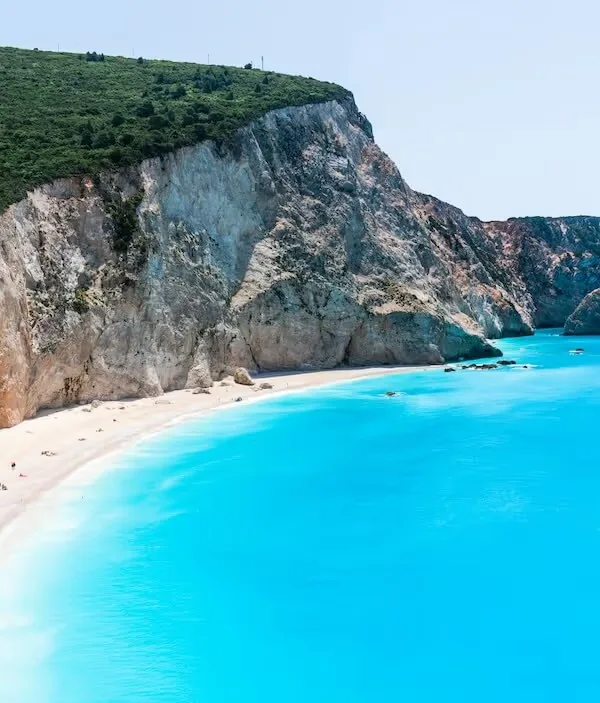
Greece has thousands of islands and a heavily indented coastline, so the distances between harbours and bays are short. A typical daily leg on a charter takes two to five hours, and land is practically always in sight: on one side the island you’ve just left, on the other the one you’re heading for. You’ll almost never find yourself on the open sea in the sense people imagine. There are always several nearby harbours and bays to shelter in if the weather changes.
The other part of the answer is the people running the boat. Professional skippers hold official licences and, perhaps more importantly, have years of experience in exactly these waters. They’re trained in navigation, radio operation, assessing the weather, first aid and handling emergencies. They know the local winds, anchorages and harbours, and they know in advance where to find shelter from any wind direction.
A few things that can help if this is your fear:
- Tell the skipper at the start. A good skipper will adapt the route: shorter legs, sailing closer to the coast, more time in bays.
- Wear a life jacket whenever you like. Nobody will look at you strangely; for children it’s compulsory while under way anyway.
- Swimming is completely optional. Many guests who aren’t confident swimmers go in from the stern ladder, with a life jacket or a pool noodle, or swim from the shore in a bay.
- Choose a catamaran if stability matters a lot to you – you’ll barely feel any heeling.
In our experience, the fear of the open sea mostly disappears on the very first day, when people see how close the coast really is.
Myth 7: “If there’s no wind, we’ll be stuck in the middle of the sea”
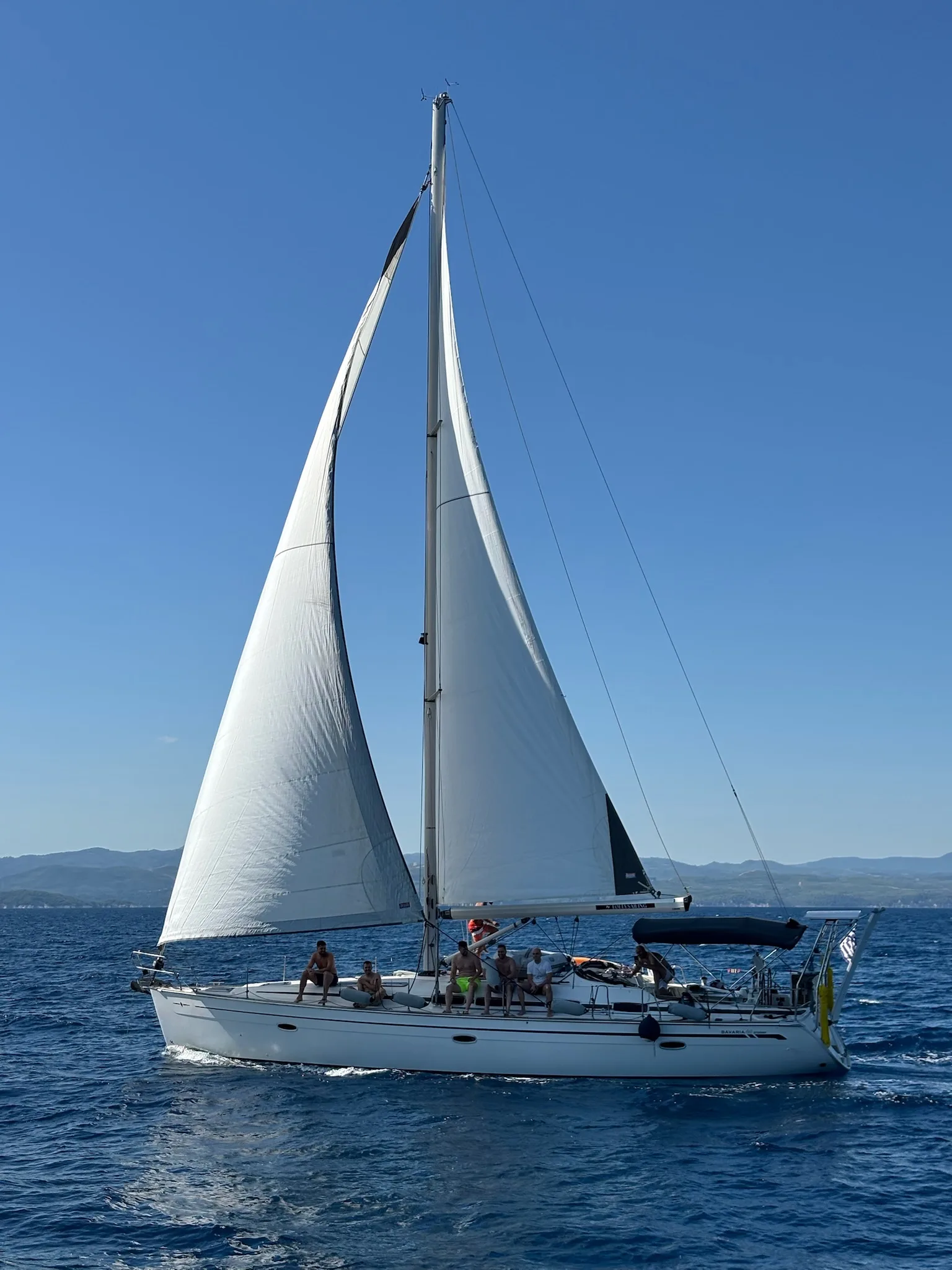
A sailing yacht doesn’t depend on the wind alone. Every charter boat has a diesel engine, used for entering and leaving harbour, for manoeuvring and for moving when there’s no wind or when it’s blowing from the wrong direction. In practice, sails and engine are combined during the week, depending on the conditions.
The opposite question is actually more interesting: what happens when there’s too much wind? In summer the Aegean gets the meltemi, a northerly wind that is strongest in July and August and can be quite powerful, especially in the afternoon. Because of it, the day is often planned so that you sail in the morning, while the wind is lighter, and spend the afternoon in a sheltered bay. The Ionian Sea is somewhat calmer in this respect, and the Sporades and the Saronic Gulf have plenty of shelter between the islands.
In short, the wind doesn’t decide whether you’ll get somewhere, only what the sailing will be like. And a day of perfect sailing with no engine, just the quiet rush of water along the hull, is what brings people back.
Myth 8: “It’s not for families with children” (or “it’s only for the young”)
You’ll meet everyone on sailing yachts: couples, groups of friends, families with children, pensioners who have been sailing for decades. Children usually adapt remarkably quickly. For them a boat is like a big playground, and swimming straight off the stern, dolphins in the distance and “helping” the skipper stay in their memories for years.
Families with small children should keep a few things in mind: children wear a life jacket while under way, they don’t move around the deck alone when the boat is sailing, and the route is planned with shorter legs and more time on the beach. For families and older guests a catamaran is often the more practical choice because of its stability, flat deck and extra space.
What matters most to older guests is agreeing on the pace in advance: fewer hours of sailing, more time in harbours and calm bays. Sailing isn’t physically demanding; getting on and off the boat and going down the steps to the cabin are usually the biggest “effort”.
What a day on a sailing yacht actually looks like
To make all of this more tangible, here’s a typical day:
- Early morning: waking up in a bay or harbour, coffee on deck, a swim before breakfast. The skipper checks the forecast and suggests a plan for the day.
- Late morning: casting off and sailing to the next destination, usually two to four hours. Someone sunbathes on the bow, someone takes the helm, someone reads.
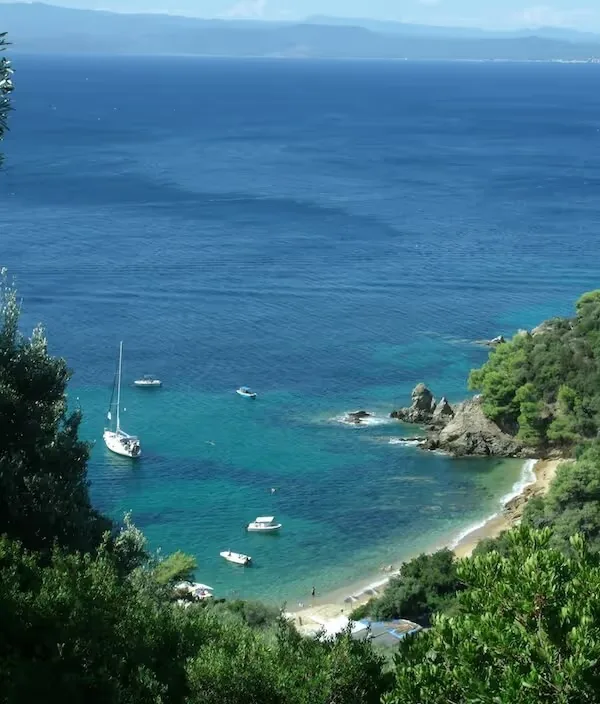
- Midday: anchoring in a bay for lunch and a swim. These are often places that are difficult or impossible to reach by land.
- Afternoon: a short sail to a harbour or a quiet anchorage for the night.
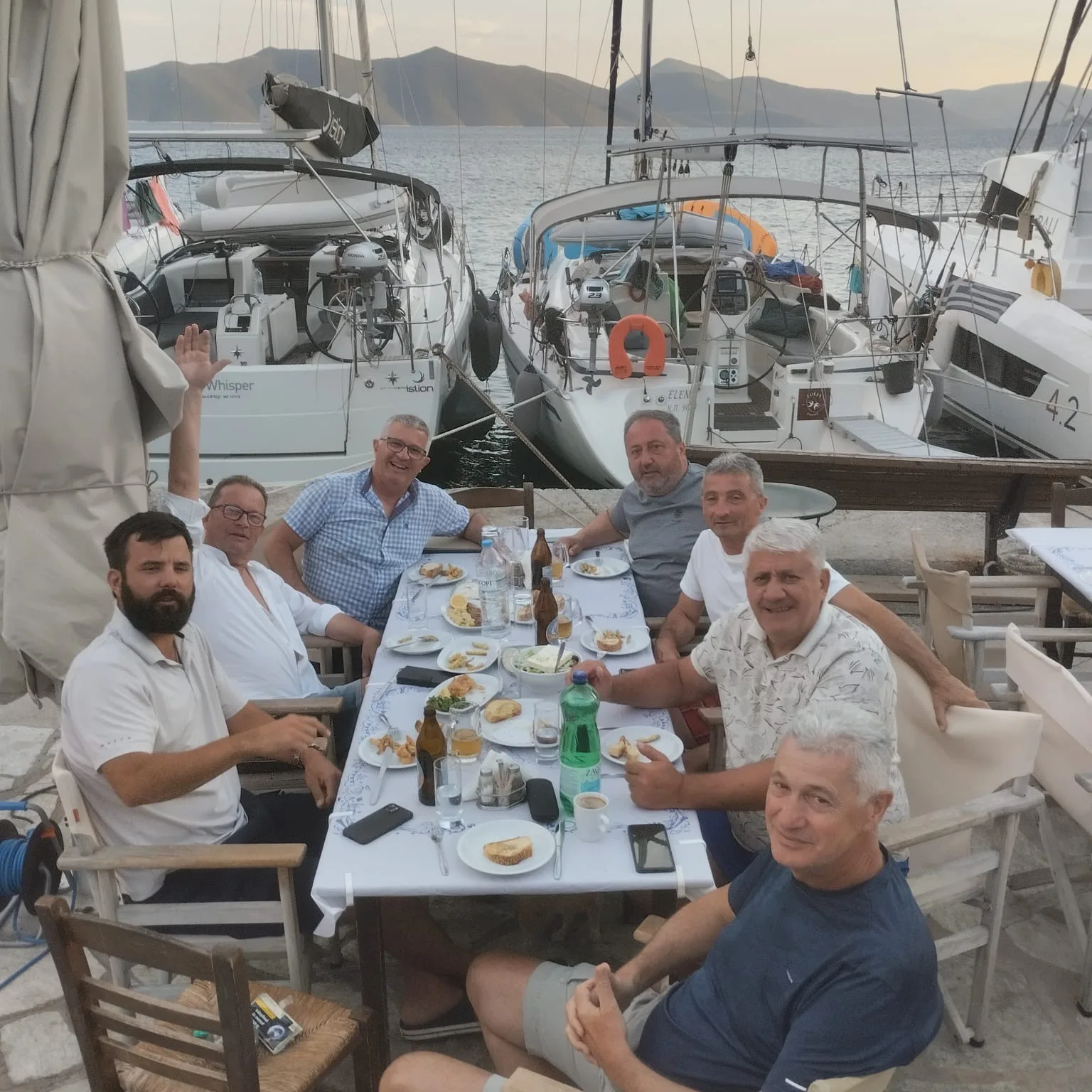
- Evening: a walk through town, dinner at a local taverna or on board, the sunset from the cockpit.
There are no rules. Some days are completely lazy, with one swim and a long lunch, and others are filled with exploring an island, snorkelling or fishing.
Who sailing may not suit
Honestly, sailing isn’t for everyone. It may not be the best choice if what matters most to you on holiday is:
- having a large hotel room, a bathtub and unlimited hot water,
- being on the same well-kept beach with sunbeds and a bar every day,
- having complete privacy from the rest of your group,
- or if you find it hard to adapt to a plan that partly depends on the weather.
If, on the other hand, crowds wear you out, you like exploring, and where you are matters more to you than how big the room is, there’s a good chance you’ll love it.
Finally
Most myths about sailing exist because so few people have actually tried it. Once it’s clear how the price works, what the skipper does, how close the coast is and what an ordinary day on board looks like, sailing stops seeming like a luxury or an adventure for the chosen few and becomes what it really is: a different, calmer way to spend the summer at sea.
If you’re thinking of giving it a try, for a first time we recommend June or September: the sea is warm, there are fewer crowds and the wind is mostly moderate. And if you have a question we haven’t answered here, feel free to write to us – we’re happy to give advice, whether or not you end up sailing with us.