

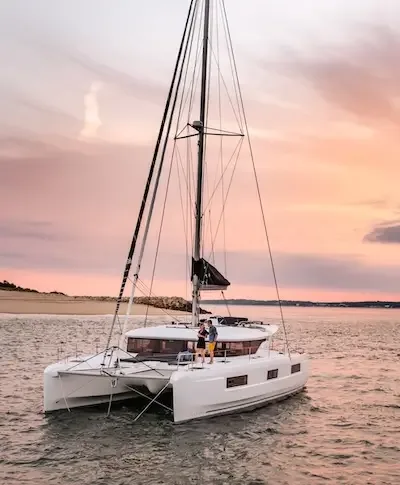
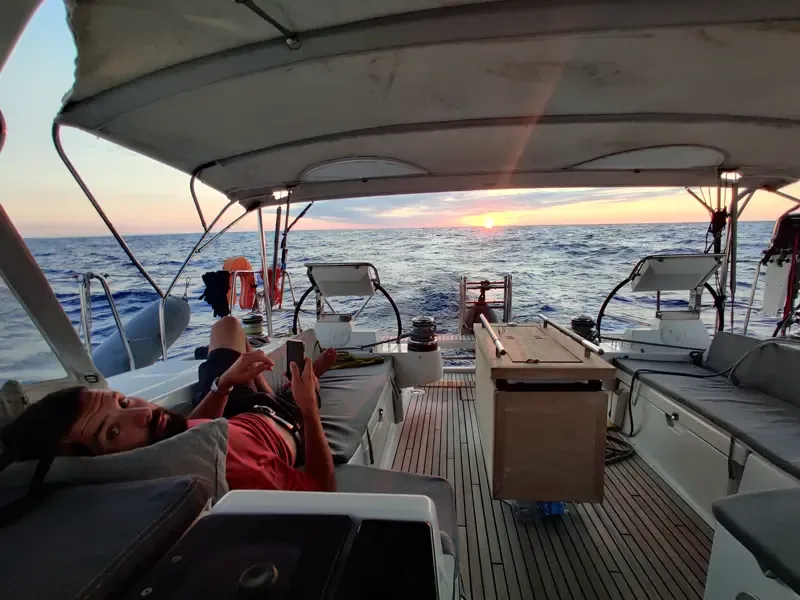
There are journeys we plan for years, and there are those that appear completely out of the blue, giving us the chance to do something we may only ever have dreamed of. My Atlantic crossing in 2023 was one of those. One phone call, one decision and 23 days on the open ocean changed the way I see sailing, the sea and what I’m capable of.
My name is Radomir Biberović. Even then, the sea was a big part of my life, and sailing was much more than a job. Still, up to that point I had never sailed outside the Mediterranean. Ahead of me lay the Atlantic Ocean, a vast expanse separating continents, with all the challenges a journey like that brings.
I didn’t know exactly what was waiting for me. All I knew was that this was an opportunity I might never get again.
Today, when I look back on those 23 days, I realise that crossing the Atlantic wasn’t just a passage from Europe to the Caribbean. It was an encounter with myself, with my own fears and with the beauty of a life lived far from land.
How did my Atlantic adventure begin?
It all started after the end of the summer sailing season in the Mediterranean. A friend offered me a place on an ocean-crossing expedition as second in command, the officer on board.
The offer came just ten days or so before departure.
At first glance it sounded like a dream come true for anyone who loves the sea. But once you realise you’ll be spending the next few weeks on a sailboat, thousands of kilometres from the safety of land, you start to think differently.
By then I had plenty of experience in the Mediterranean. I knew the winds, the changes in the weather and the challenges sailing brings. But the ocean was something new.
One of the things that inspired me was the story of a girl from Australia who set off to sail around the world at just 16. I thought: if she could take on an adventure that big at her age, why shouldn’t I, at 25, try to cross the Atlantic?
Of course, wanting an experience like that wasn’t enough. I had to make the decision, accept the responsibility and be ready for uncertainty.
I decided to go.
Six people, one sailboat and an endless ocean
There were six of us on board: the captain, me as the officer, and four guests who had joined the expedition to experience an Atlantic crossing.
Six people on a sailboat may not sound like a particularly small group. But when you spend 23 days on the same boat with no way to simply step off, go for a walk or find a quiet spot on land, every little thing starts to matter.
On the ocean, life comes down to simple things. Sleep, meals, watches, keeping an eye on the weather, maintaining the boat and looking after the rest of the crew become your daily routine.
Everyone has a role, and good communication and mutual trust aren’t just nice to have – they’re essential.
Alongside navigation and my other duties on board, I had one more job. I’m a chef by profession, so I was also in charge of cooking for the whole crew.
Cooking on a sailboat in the middle of the Atlantic is a completely different experience from cooking in a restaurant or at home. Space is tight, the boat never stops moving, and managing food and water takes careful planning.
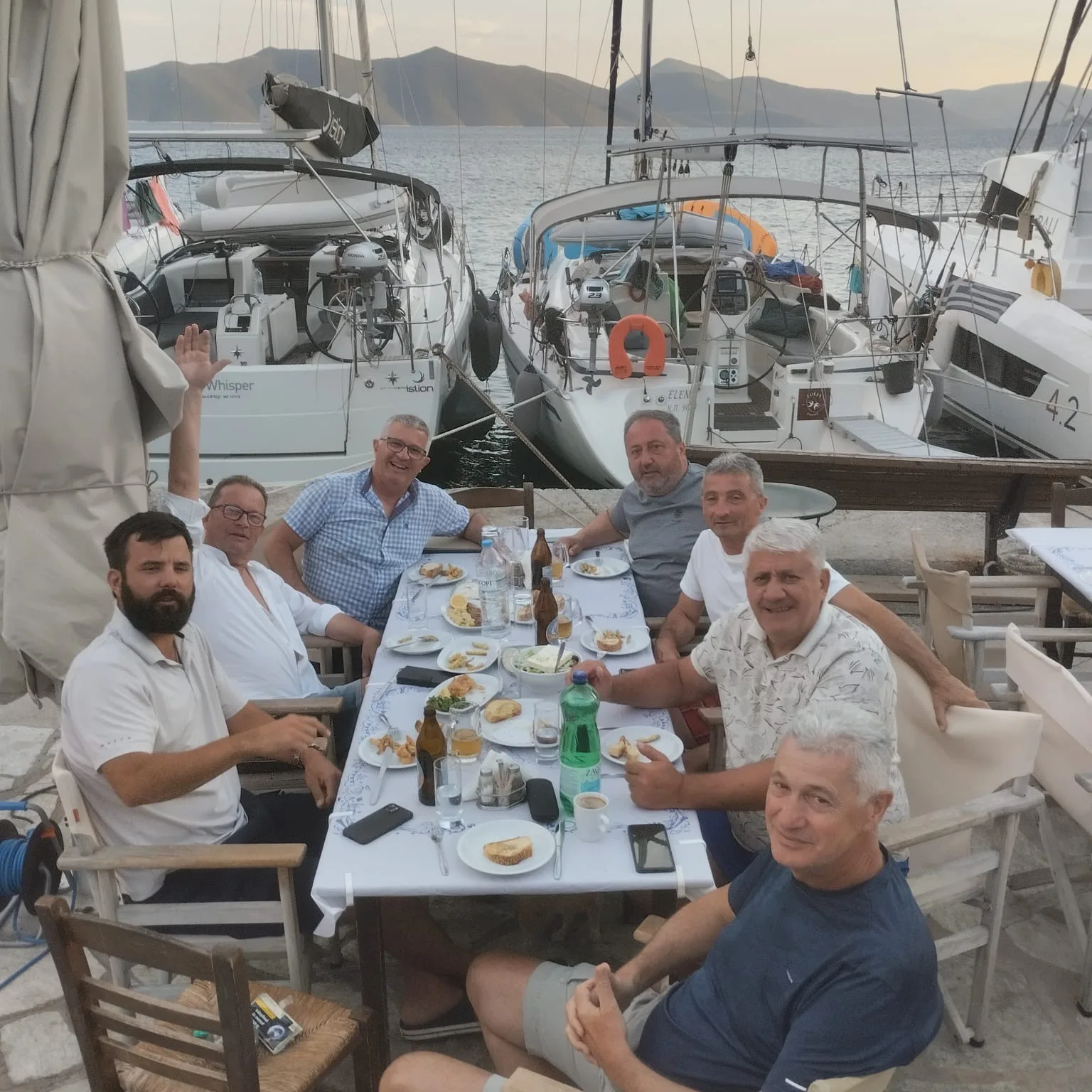
Still, our shared meals had a special value. On days when there was nothing around us but water and horizon, a meal was a chance to come together, talk and forget for a while how far we were from land.
On a journey like that you realise that luxury doesn’t have to mean a big cabin, a restaurant or a comfortable hotel. Sometimes all you need is a good meal, people you trust and a sailboat carrying you safely towards your destination.
What actually happens when you don’t see land for days?
When people talk about crossing the Atlantic, most of them imagine huge waves, storms, dramatic scenes and a battle with the ocean.
The reality is often different.
On our crossing we didn’t have any serious bad weather. There were a few smaller storms, but they were mostly short-lived, sometimes lasting just a few tens of minutes.
Honestly, I’ve seen worse weather in the Mediterranean.
But the biggest difference between the Mediterranean and the Atlantic isn’t necessarily the height of the waves or the strength of the wind. It’s the distance from the safety of land.
In the Mediterranean there’s often an island, a harbour or some other option relatively close by. On the ocean you can look in every direction and see nothing but water for days.
If something breaks, if someone gets hurt or falls ill, help can’t reach you as quickly as it can when you’re sailing near the coast.
That fact changes the way you think.
You start to value prevention, the boat’s technical condition, the weather forecast and every decision you make. Out on the open ocean there isn’t much room for careless moves.
And then there’s something that’s hard to explain to people who have never spent that long at sea.
The silence.
No traffic, no city noise, no daily obligations and none of the usual interruptions. Day and night follow each other at their own pace, and your world shrinks to the small space of the boat surrounded by endless blue.
At first it’s fascinating. Later you begin to feel just how far you are from everything familiar.
When your mind starts playing tricks on you
One of the things I learned while crossing the Atlantic is that physical effort isn’t always the biggest challenge.
Sometimes it’s much harder to deal with your own thoughts.
When you spend enough time on the ocean, without the usual distractions, you start to notice how much your mind can shape your mood and the way you experience a situation.
An unusual noise from the boat, a change in the weather or simply the thought of how far you are from land can set off a whole chain of questions.
What if something breaks? What if the weather gets worse? What if something unexpected happens?
Those are normal questions, especially when you’re making an ocean passage for the first time.
What matters, though, is telling the difference between healthy caution and fear that starts to take over your thinking. On a boat you have to be aware of the potential dangers, but also able to stay calm and make rational decisions.
After two weeks of constant rolling, even I, despite my experience at sea, started to feel the effects a little.
Seasickness didn’t spare me either.
For the captain and me, one of our biggest worries was that the guests might suffer badly from seasickness. Fortunately, only one guest had trouble, and only for a single day.
In the end we realised that organisation, patience and supporting each other were crucial for the whole crew to work well together.
On the ocean you quickly learn that you don’t have to be the strongest at every moment or have an answer to every question. It’s enough to know your responsibilities, trust the people around you and keep your head.
An autopilot failure in the middle of the Atlantic
Every serious journey comes with the possibility of the unexpected. On ours, a breakdown reminded us how important it is to be ready for change.
Partway through the crossing, our autopilot failed.
To someone who doesn’t know much about sailing, that might sound like a minor technical issue. But on a long ocean passage, the autopilot is a very important part of the boat’s steering system.
When you sail for days and weeks on end, steering the boat takes constant attention and well-organised watches. The autopilot makes it easier to hold a course and lets the crew share out their duties more efficiently.
When a system like that breaks down, you have to adapt the way you work and organise the passage around the new circumstances.
That’s one of the reasons why experience, technical preparation and the ability to adapt matter so much in sailing.
On the ocean you can’t just call a repair service and wait for someone to come out to the boat.
You have to assess the situation, weigh up the options and organise the crew so the passage can continue safely.
The breakdown showed us that even the most beautiful adventure isn’t made up only of romantic moments, sunsets and wind in the sails.
Real experience shows itself precisely when things don’t go the way we planned.
Arriving in the Caribbean: a moment to remember
After 23 days on the open sea we finally reached Martinique, a French island in the Caribbean Sea.
It’s hard to describe the feeling of approaching land again after so long in the middle of the ocean.
When you’ve been looking at the same horizon for days and then an island appears in front of you, everything feels different. The colours, the smells, the vegetation and the sight of the coast make you feel as if you’re entering a whole new world.
Martinique was the end of a great journey, but also the beginning of a new chapter.
Behind us were days of sailing, shared meals, conversations, watches, technical challenges and moments when we had to find calm in the middle of uncertainty.
We had crossed the Atlantic.
For me, having never sailed outside the Mediterranean before, it was much more than another entry in my logbook. It was proof that sometimes you should take an opportunity even when you can’t know in advance how it will all turn out.
Not because we don’t feel fear, but because we’re ready to learn, adapt and go one step further.
What did the Atlantic teach me about sailing?
If I had to pick the most important lesson from this journey, I’d say it was respect for the sea.
We can’t control the sea. We can understand its patterns, study the weather, maintain the boat and make responsible decisions. We can gain experience and improve our skills.
But we must never forget that at sea we are guests.
The second important lesson is how much the crew matters. The boat can be excellent, the navigation equipment modern and the route carefully planned, but the people sailing together make an enormous difference.
Patience, responsibility, communication and mutual trust are the foundation of every good voyage.
And perhaps most importantly, I realised that some things simply can’t be learned from books or videos. You can study sailing, talk to experienced sailors and prepare as much as you like, but some lessons only come when you find yourself in a real situation.
That’s exactly why I believe sailing is much more than steering a boat.
It’s a way to get to know yourself, other people and nature in a completely different way.
From the Atlantic to Eolia Sailing
Today, through Eolia Sailing, I want to pass on a part of that experience to the people who come on board.
Not everyone has to cross the Atlantic to have a special adventure at sea. Not everyone has to be an experienced sailor or know everything about wind, navigation and the boat’s systems.
Sometimes all it takes is to make the first move and decide to spend one week differently.
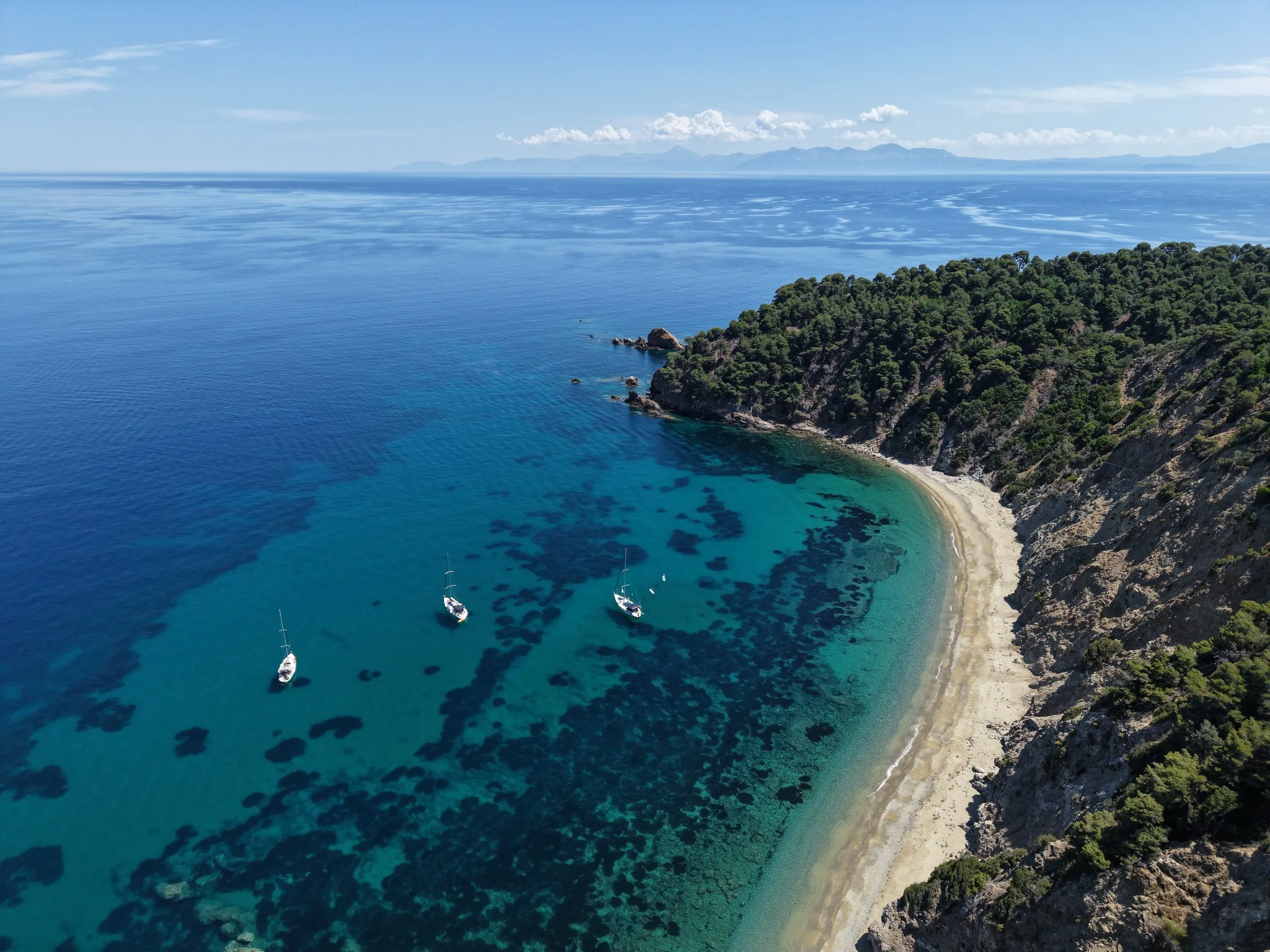
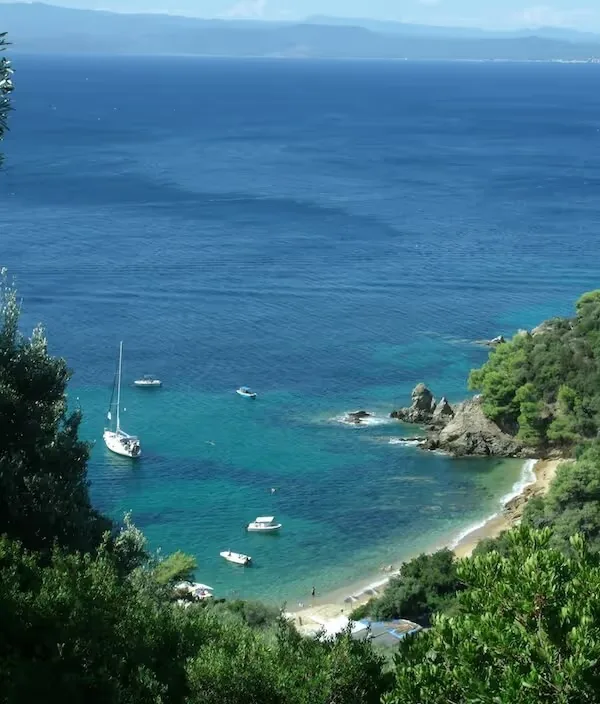
To wake up in a quiet bay, jump into the turquoise sea, have breakfast on deck and watch the wind slowly fill the sails.
To discover places you can’t reach by car, find hidden coves and spend time with people who share your love of adventure.
That’s exactly what I want to give the guests of Eolia Sailing.
My experience on the Atlantic taught me how important it is to be responsible, adaptable and ready for the unexpected. But at the same time it reminded me why I fell in love with the sea in the first place.
For the feeling of freedom. For the simplicity of life on board. For the moments when you realise you don’t need much to be happy.
And for the fact that every new journey can teach you something.
Crossing the Atlantic in 2023 remains one of the most important experiences of my life. Twenty-three days on the ocean changed the way I look at sailing, responsibility and my own limits.
And the sea? The sea is still there, with new routes, new challenges and stories that are yet to be told.
Maybe the next one is yours.